

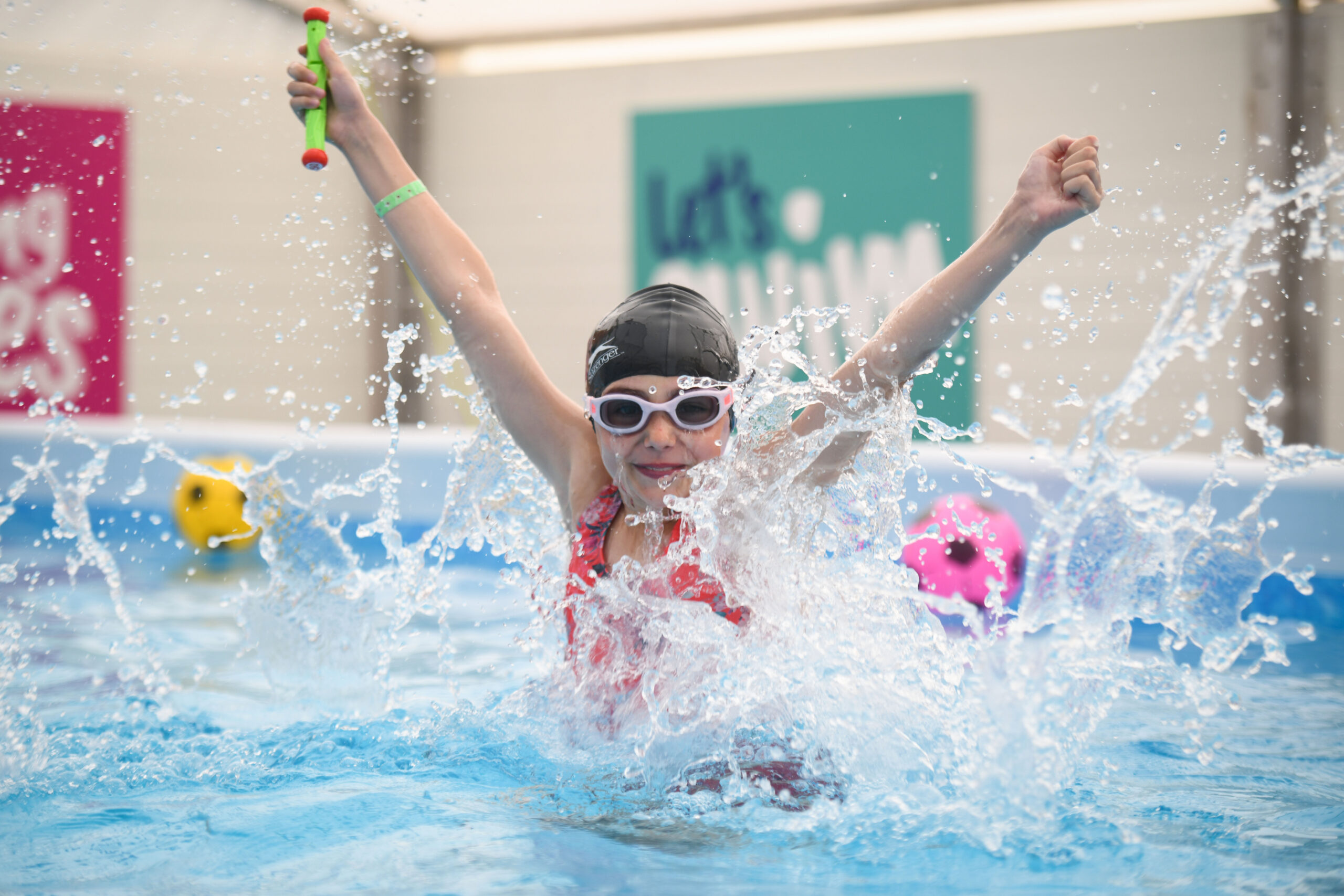
How Swim:ED is improving primary school swimming and water safety
Swim:ED’s pop-up pool programme supercharges swimming attainment while widening access to essential water safety and knowledge.
A growing divide in swimming and water safety education.
Thousands of children across England leave primary school without fundamental swimming and water safety skills. By the time they leave primary school, the National Curriculum expects children to meet three key targets: swim competently over at least 25 metres, use a range of strokes effectively, and perform safe self-rescue in different water-based situations.
Yet staff resourcing issues, declining pool stock, and a postcode lottery of swimming provision are preventing too many pupils from reaching minimum standards, particularly those from disadvantaged communities:
In 2025, 27% of Year 7 pupils could not confidently swim 25 metres.
30% could not perform safe self-rescue.
In schools with a higher proportion of pupils eligible for free school meals, the number of children unable to swim 25 metres rises to 45%.
Access plays a make-or-break role. For many schools, local pool closures mean longer journeys, complex logistics, and hours of lost learning time, while an ageing swimming estate and instructor shortages limit opportunities for effective teaching. BBC research shows that most UK children receive just six weeks of 30-minute swimming lessons during primary school, the equivalent of only three hours of tuition across four years.
The consequences can be devastating. Child drowning deaths have doubled since 2020, with children from ethnic minority and deprived communities disproportionately affected.
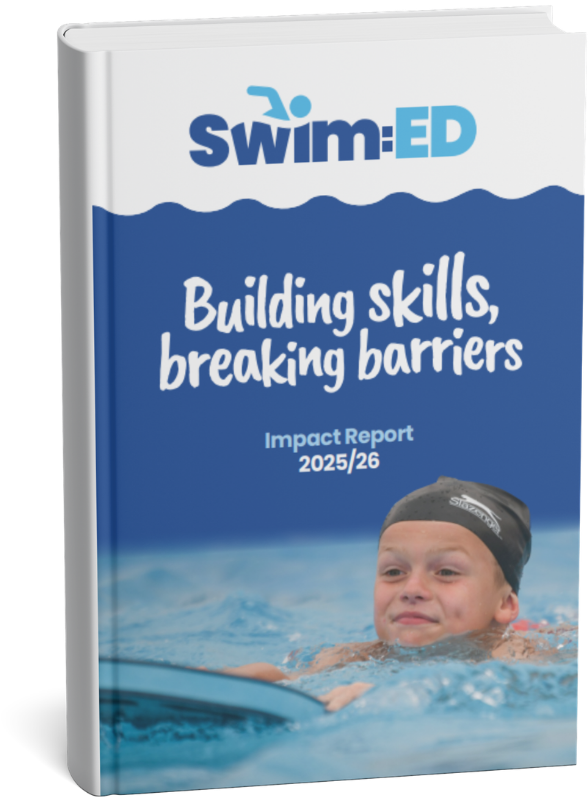
Swim:ED’s Building Skills, Breaking Barriers 2025/26 Impact Report details how the programme is changing the picture in primary schools across England. Through research, innovation, and proven outcomes, Swim:ED is breaking down barriers to swimming and water safety education, helping more children develop the skills to protect themselves in and around water.
Reaching more pupils, powering stronger results
By bringing the pool directly to the playground, Swim:ED removes many of the disruption, costs, and access issues associated with traditional off-site swimming lessons.
As a Swim:ED delivery partner, we bring this approach directly to schools in Oldham, Rochdale and Central Manchester, providing access to heated pop-up swimming facilities, experienced instructors, and bespoke KS1 and KS2 swimming curriculums.
The programme maximises every minute in the water, helping children learn and consolidate core skills more quickly:
- Intensive, tailored instruction. Over 5–7 weeks, children receive fifteen 45-minute sessions, learning in specialised groups of no more than ten.
- Greater impact in less time. Compared to conventional off-site arrangements, typically involving weekly 25-minute lessons across ten weeks, schools report stronger outcomes in significantly shorter timescales.
- Inclusive, personalised provision. Flexible teaching supports younger and more anxious swimmers, as well as pupils with Special Educational Needs and Disabilities (SEND).
The results are clear and compelling. Swim:ED’s 2025/26 impact report captures the achievements of 3,740 Year 6 pupils, 1,491 more than the previous year.
Across the latest cohort, 85% of children improved in at least one National Curriculum focus area, with substantial gains across every key measure:
Safe self-rescue
68%
of pupils could perform self-rescue after Swim:ED, up from just 15% before the programme.
A 351% increase.
Water safety theory
89%
of children could explain how to protect themselves in and around water after Swim:ED, up from 18% before the programme.
A 388% relative increase.
Swimming 25 metres unaided
62%
of pupils could swim 25 metres unaided after Swim:ED, up from 24% before the programme.
A 157% increase.
Mastering multiple strokes
70%
of pupils could demonstrate multiple strokes after Swim:ED, up from 34% before the programme.
A 105% increase.